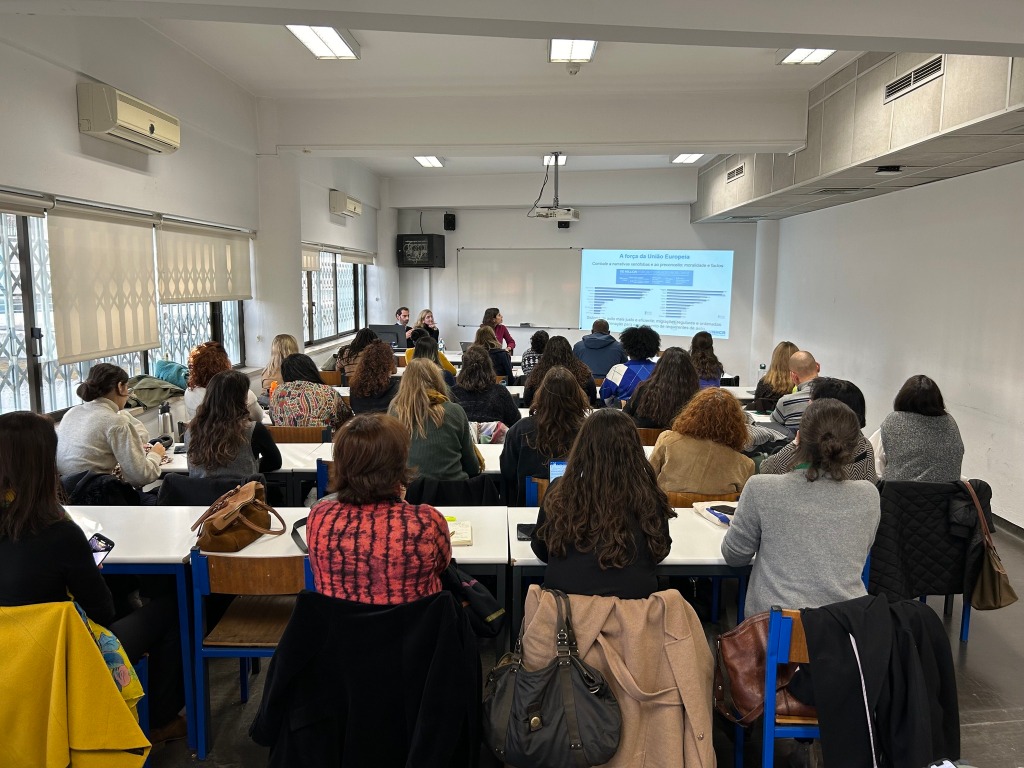
The NOVA Asylum Policy Lab (NOVA-APL) and the Jean Monnet Module on EU Asylum Policy: assessing practices of refugees reception (EUAsPO) organized the event “Debates: International Migrants’ Day” on December 15th at the Faculty of Social Sciences and Humanities of NOVA (NOVA FCSH). Participants discussed the following topics: “Could migratory flows jeopardize the European Union (following what Josep Borrell said)?”, and “How to address the challenges of welcoming/integrating migrants in the European Union and in Portugal?”.
After the welcome by the General Coordinator of NOVA APL, Gariele De Angelis, Ana Sofia Barros, the representative of the United Nations High Commissioner for Refugees (UNHCR) in Portugal, spoke about the importance of investing in local power and community work. Following this, Ana Magalhães, representative of the Lisbon City Council / Municipal Team for Refugee Support, discussed the dimensions of the work of the technical teams for reception and integration of the Municipal Program for Refugee Reception in Lisbon (PMAR Lx).

In the first debate, moderated by Dulce Pimentel, a Professor at NOVA FCSH, the question raised was “Could migrations jeopardize the European Union?”. João Estevens, member of NOVA APL and researcher at the Portuguese Institute of International Relations (IPRI-NOVA), highlighted the securitization of the migration issue. Alexander Kpatue Kweh, representative of the Refugee Forum Portugal, recalled toxic political discourses that appeal to nationalism and xenophobia. Inês Carreirinho, representative of the Portuguese Council for Refugees (CPR), spoke about the idea of a unified asylum and refugee policy for the EU. Followed by Leonor Félix da Costa, from the Jesuit Refugee Service (JRS Portugal), who raised the issue of differences in reception among migrants from different origins. To conclude the first afternoon debate, Francisca Gorjão Henriques, from the “Pão a Pão” Association, emphasized the importance of valuing the skills of migrants.
The second debate, moderated by Elizabeth Challinor, coordinator of the NOVA APL Think Tank and researcher at the Center for Research in Anthropology (CRIA – NOVA FCSH), addressed the theme “Flow management and integration – challenges in the EU and Portugal”. Emellin de Oliveira, Executive and Consultancy Coordinator of NOVA-APL and researcher at the Center for Research on Law and Society (CEDIS – NOVA School of Law), reflected on how the security theme interferes with legal issues related to migrations. Next, Ana Cansado, Voluteering Coordinator of NOVA APL, recalled the responsibilities not assumed by the EU in the face of the need for forced migration. Diaby Abdourahamane, from ComParte – Maria Rosa Foundation, said that the solution for successful integration involves the direct participation of those who need it. Followed by Mafalda Matias, from the Lisbon Project, who spoke about the importance of integration through an inclusive process with respect for the human person. Closing the second debate, Patrícia Bruno, from the Aga Khan Foundation Portugal, discussed the obstacles to integration, highlighting linguistic barriers and difficulties in accessing the job market.
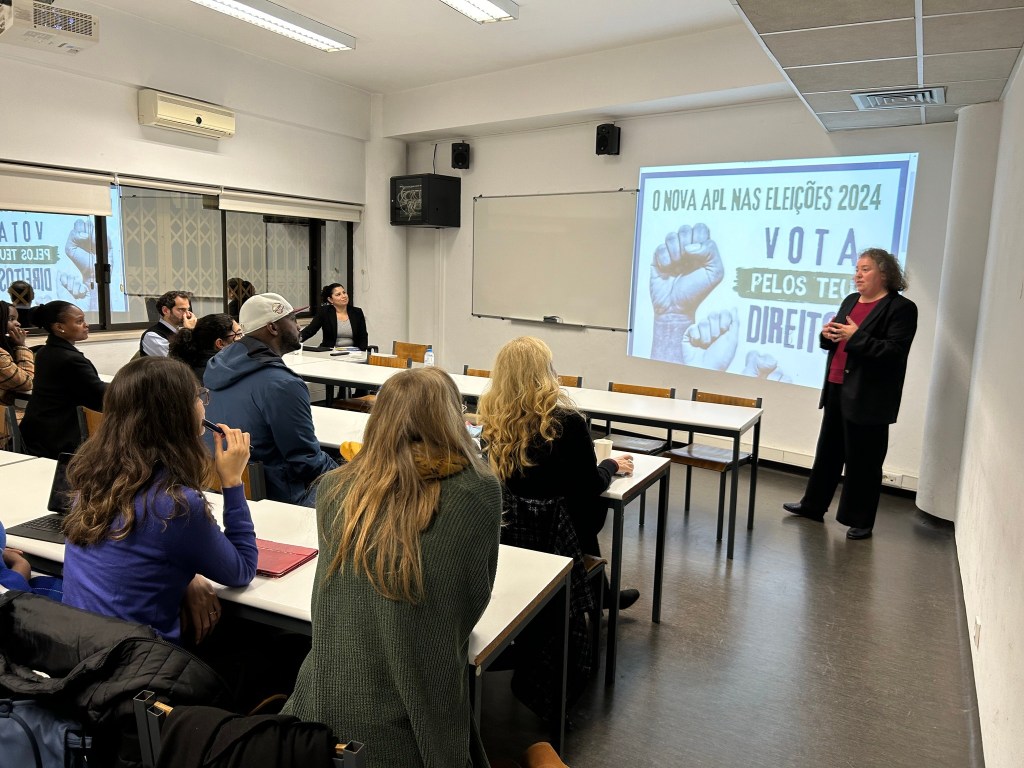
Catarina Reis de Oliveira, Scientific Coordinator of the Migration Observatory (OM), concluded the afternoon of discussions, emphasizing the importance of promoting awareness campaigns on migration issues. In closing, Ana Cansado and Emellin de Oliveira presented another project of the NOVA Asylum Policy Lab, “NOVA APL in the 2024 Elections”.
[Tradução em Português do NOVA Asylum Policy Lab]
O NOVA Asylum Policy Lab (NOVA-APL) e o Jean Monnet Module on EU Asylum Policy: assessing practices of refugees reception (EUAsPO) organizaram, no dia 15 de dezembro, o evento “Debates: Dia Internacional dos/as Migrantes” na Faculdade de Ciências Sociais e Humanas da NOVA (NOVA FCSH). Os participantes discutiram os seguintes temas: “Poderão as vagas migratórias pôr em risco a União Europeia (seguindo o que Josep Borrell disse)?”; e “Como lidar com os desafios do acolhimento/integração de migrantes na União Europeia e em Portugal?”.
Após as boas-vindas do Coordenador Geral do NOVA APL, Gariele De Angelis, Ana Sofia Barros, representante da Agência da ONU para Refugiados (ACNUR) em Portugal, destacou a importância de investir no poder local e no trabalho em comunidade. Em seguida, Ana Magalhães, representante da Câmara Municipal de Lisboa / Equipa Municipal de Apoio ao Acolhimento de Refugiados, abordou as dimensões do trabalho das equipas técnicas de acolhimento e integração do Programa Municipal de Acolhimento de Refugiados na cidade de Lisboa (PMAR Lx).
No primeiro debate, mediado por Dulce Pimentel, Professora da NOVA FCSH, a questão levantada foi “Poderão as migrações pôr em risco a União Europeia?”. João Estevens, membro do NOVA APL e investigador do Instituto Português de Relações Internacionais (IPRI-NOVA), destacou a securitização do tema das migrações. Alexander Kpatue Kweh, representante do Fórum Refúgio Portugal, mencionou os discursos políticos tóxicos que apelam ao nacionalismo e à xenofobia. Inês Carreirinho, representante do Conselho Português para os Refugiados (CPR), falou sobre a ideia de uma política de asilo e refúgio unificada para a UE. Leonor Félix da Costa, do Serviço Jesuíta para os Refugiados (JRS Portugal), abordou as diferenças no acolhimento entre migrantes de origens diferentes. Francisca Gorjão Henriques, da Associação Pão a Pão, enfatizou a importância de valorizar as competências dos migrantes.
No segundo debate, mediado por Elizabeth Challinor, Coordenadora do Think Tank do NOVA APL e investigadora do Centro em Rede de Investigação em Antropologia (CRIA – NOVA FCSH), o tema foi “Gestão de fluxos e integração – desafios na UE e em Portugal”. Emellin de Oliveira, Coordenadora-Executiva e da Consultoria do NOVA APL e investigadora do Centro de Investigação sobre Direito e Sociedade (CEDIS – NOVA School of Law), refletiu sobre como o tema da segurança interfere nas questões legais relacionadas às migrações. Ana Cansado, Coordenadora do Voluntariado do NOVA APL, destacou as responsabilidades não assumidas pela UE diante da necessidade de migração forçada. Diaby Abdourahamane, da ComParte – Fundação Maria Rosa, afirmou que a solução para uma integração bem-sucedida passa pela participação direta daqueles que dela precisam. Mafalda Matias, do Lisbon Project, falou sobre a importância da integração por meio de um processo inclusivo com respeito à pessoa humana. Encerrando o segundo debate, Patrícia Bruno, da Fundação Aga Khan Portugal, abordou os obstáculos à integração, destacando a barreira linguística e as dificuldades de acesso ao mercado de trabalho.
Catarina Reis de Oliveira, Coordenadora Científica do Observatório das Migrações (OM), concluiu a tarde de discussões, ressaltando a importância da divulgação de campanhas de sensibilização sobre as questões da migração. No encerramento, Ana Cansado e Emellin de Oliveira apresentaram mais um projeto do NOVA Asylum Policy Lab, o “NOVA APL nas Eleições 2024”.
 NOVA Asylum Policy Lab