
On 21 June 2024, the NOVA Asylum Policy Lab (NOVA APL) and the Jean Monnet Module on EU Asylum Policy: assessing practices of refugee reception (EUAsPO) organised an afternoon debate entitled “Thoughts on the European Union’s New Pact on Migration and Asylum”, to commemorate World Refugee Day, celebrated annually on 20 June.
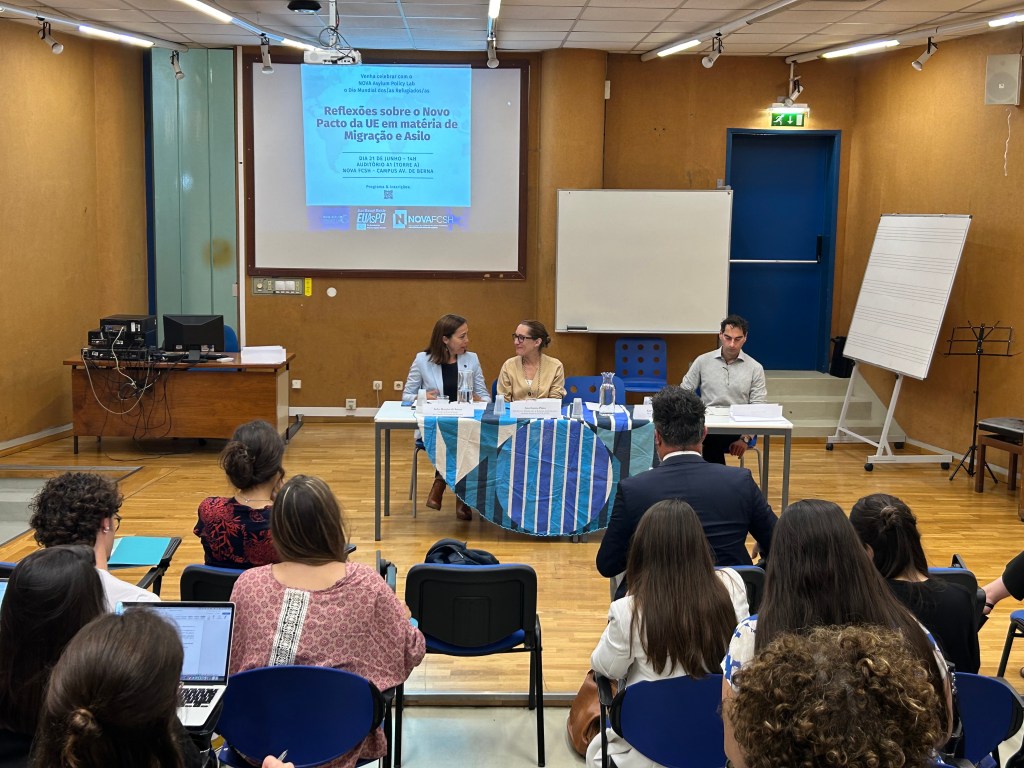
After a welcome from the General Coordinator of NOVA APL & Researcher at the NOVA Institute of Philosophy – IFILNOVA, Gabriele De Angelis, the Head of the European Commission Representation in Portugal, Sofia Moreira de Sousa, addressed the challenges of approving the Pact and the commitment made by the Member States of the European Union (EU). Ana Santos Pinto, Deputy Director for Institutional Relations and Social Inclusion at NOVA FCSH, highlighted the politicisation of migration issues and the importance of the academic environment in the context of receiving people in situations of refuge.
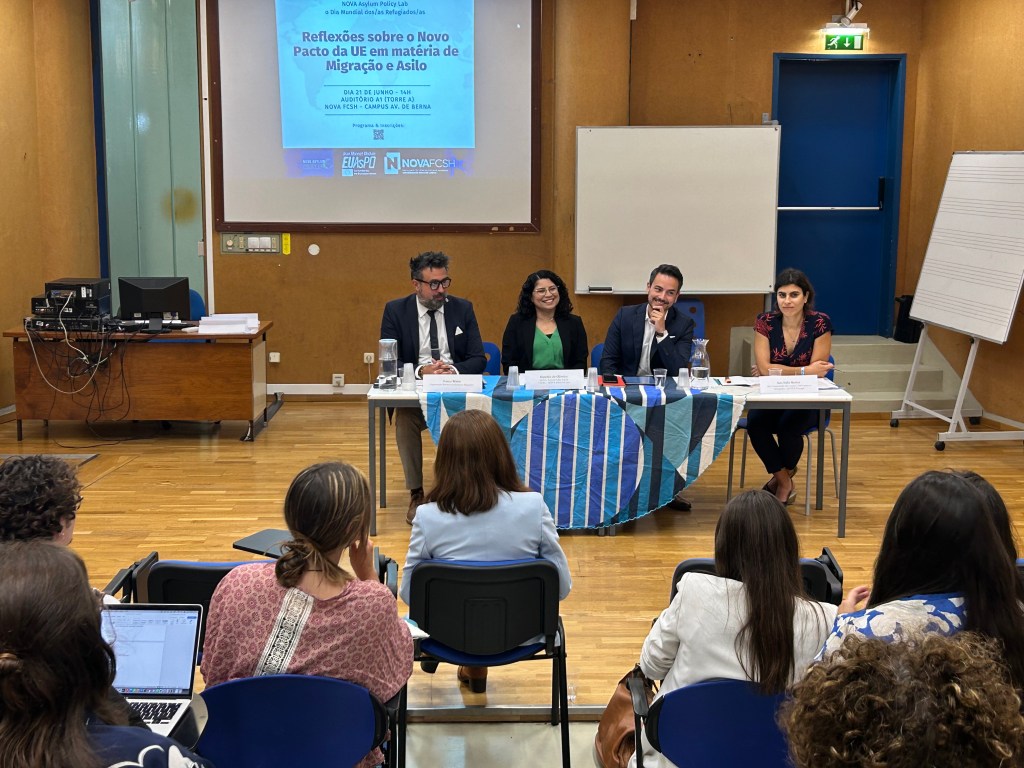
In the first session, mediated by André Carvalho Ramos, journalist for CNN Portugal, Vasco Malta, Head of Mission of the International Organisation for Migration in Portugal (IOM Portugal), provided a general overview of the European Pact and commented on the five new regulations, as well as highlighted the challenges to their implementation. Ana Sofia Barros, Protection Officer at the United Nations High Commissioner for Refugees – UNHCR Portugal, addressed aspects related to the Screening Regulation and outlined issues relating to unaccompanied children separated from their adult carers. Finally, Emellin de Oliveira, Executive Coordinator of NOVA APL and Researcher at CEDIS – NOVA School of Law, emphasised the issue of detentions and the screening mechanism at borders, also highlighting the changes to the EURODAC Regulation and the lowering of the age (from 14 to 6) for the collection of biometric data.
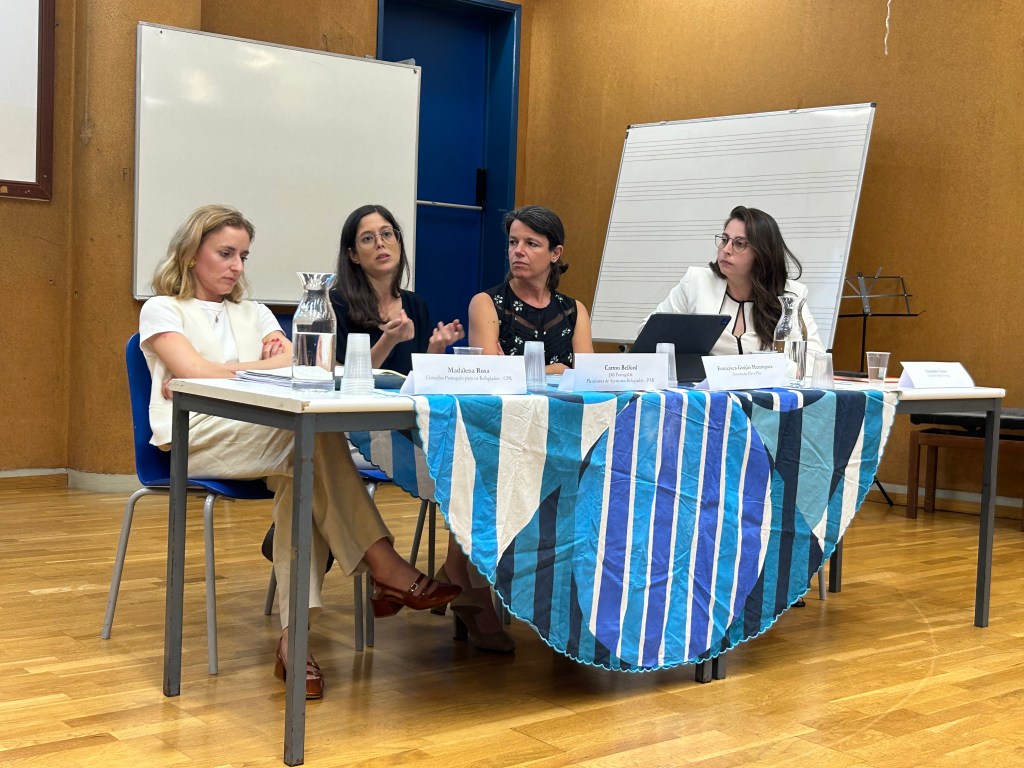
The second session was moderated by Amanda Lima, a journalist from the Global Media Group. Madalena Rosa, a technician from the Legal Office of the Portuguese Council for Refugees – CPR, addressed the unequal treatment of asylum seekers from their country of origin, highlighting the main risks and challenges posed by the Pact from the perspective of civil society. Carmo Belford, Coordinator of the Advocacy and Legal Support Office of JRS Portugal and of the Refugee Support Platform – PAR, drew attention to the urgent implementation of alternative measures to detention, citing Romania and Belgium as examples of good practice, as well as calling for the promotion of legal and safe migration routes in the EU. Finally, Francisca Gorjão Henriques, President of the Board of Associação Pão a Pão, warned of the risks to the life and integrity of people in migratory processes in the face of increasing barriers to migration and regularisation.
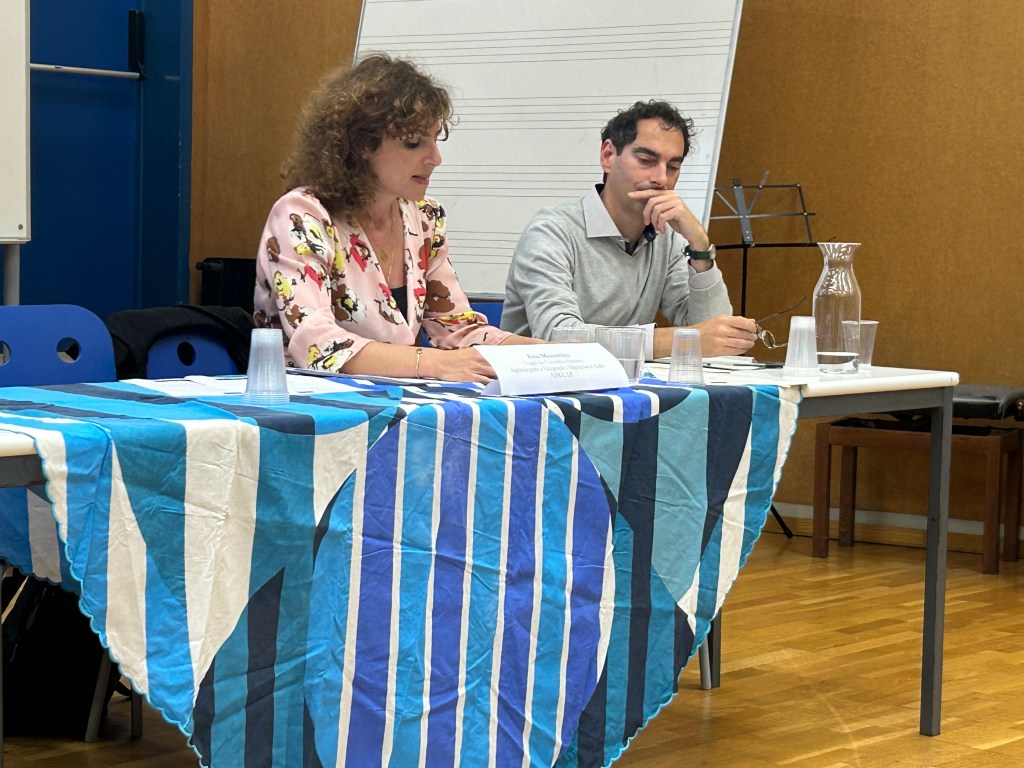
In closing, Ana Monteiro, Member of the Board of Directors of the Agency for Integration, Migration and Asylum – AIMA, I.P., highlighted the competences of AIMA, I.P., in terms of document management and integration, as well as the challenges faced by the Agency in its first few months of operation. In addition, she left on a positive note that there is an intention to find lasting and joint solutions to resolve pending issues and prioritise faster responses, as it is believed that documentation is the first step towards integration.
[Tradução em Português do NOVA Asylum Policy Lab]
O NOVA Asylum Policy Lab (NOVA APL) e o Jean Monnet Module on EU Asylum Policy: assessing practices of refugees reception (EUAsPO) organizaram, no dia 21 de junho de 2024, uma tarde de debate intitulada “Reflexões sobre o Novo Pacto da União Europeia em matéria de migração e asilo”, em comemoração pelo Dia Mundial dos/as Refugiados/as, celebrado anualmente no dia 20 de junho.
Após as boas-vindas do Coordenador Geral do NOVA APL & Investigador do Instituto de Filosofia da NOVA – IFILNOVA, Gabriele De Angelis, a Chefe da Representação da Comissão Europeia em Portugal, Sofia Moreira de Sousa, abordou os desafios para a aprovação do Pacto e o compromisso assumido entre os Estados-Membros da União Europeia (UE). Ana Santos Pinto, Subdiretora Adjunta para as Relações Institucionais e Inclusão Social da NOVA FCSH, destacou a politização das questões da migração e a importância do ambiente académico no contexto de receção de pessoas em situação de refúgio.
Na primeira sessão, mediada por André Carvalho Ramos, jornalista da CNN Portugal, Vasco Malta, Chefe de Missão da Organização Internacional para as Migrações em Portugal (OIM Portugal), fez o enquadramento geral sobre o Pacto Europeu e teceu comentários sobre os cinco novos regulamentos, bem como destacou os desafios à sua implementação. Ana Sofia Barros, Oficial de Proteção do Alto Comissariado das Nações Unidas para os Refugiados – ACNUR Portugal, tratou dos aspetos relacionados com o Regulamento Triagem e deu notas de questões relativas às crianças não acompanhadas e separadas dos adultos de referência. Por fim, Emellin de Oliveira, Coordenadora Executiva do NOVA APL e Investigadora do CEDIS – NOVA School of Law, sublinhou a questão das detenções e do mecanismo de triagem nas fronteiras, destacando ainda as alterações ao Regulamento EURODAC e a diminuição da idade (de 14 para 6 anos) para fins de recolha de dados biométricos.
A segunda sessão teve como moderadora Amanda Lima, jornalista do Global Media Group. Madalena Rosa, Técnica do Gabinete Jurídico do Conselho Português para os Refugiados – CPR, abordou a desigualdade no tratamento de requerentes de asilo a partir do seu país de origem, ressaltando os principais riscos e desafios colocados pelo Pacto na perspetiva da sociedade civil. Carmo Belford, Coordenadora do Gabinete de Advocacy e Apoio Jurídico do JRS Portugal e da Plataforma de Apoio aos Refugiados – PAR, chamou a atenção à urgente implementação de medidas alternativas à detenção, citando como exemplo de boas práticas a Roménia e a Bélgica, bem como pugnou pela promoção das vias migratórias legais e seguras na UE. Por último, Francisca Gorjão Henriques, Presidente da Direção da Associação Pão a Pão, alertou para os riscos para a vida e a integridade das pessoas em processos migratórios diantedo aumento das barreiras para migração e regularização.
No encerramento, Ana Monteiro, Vogal do Conselho Diretivo da Agência para a Integração, Migrações e Asilo – AIMA, I.P., destacou as competências da AIMA, I.P., no âmbito gestão documental e de integração, bem como os desafios enfrentados pela Agência nos seus primeiros meses de atuação. Ademais, a Vogal deixou uma nota positiva que há intenção de encontrar soluções duradouras e conjuntas para solucionar as pendências e priorizar as respostas mais céleres, pois se acredita que a documentação é o primeiro passo para a integração.
 NOVA Asylum Policy Lab